News · Ackermans & van Haaren NV
AvH: SIPEF expects more cash, with replanting that may have to wait
Agricultural profits are growing. But the cash outlook also reflects an investment timetable being reshaped by dry weather.
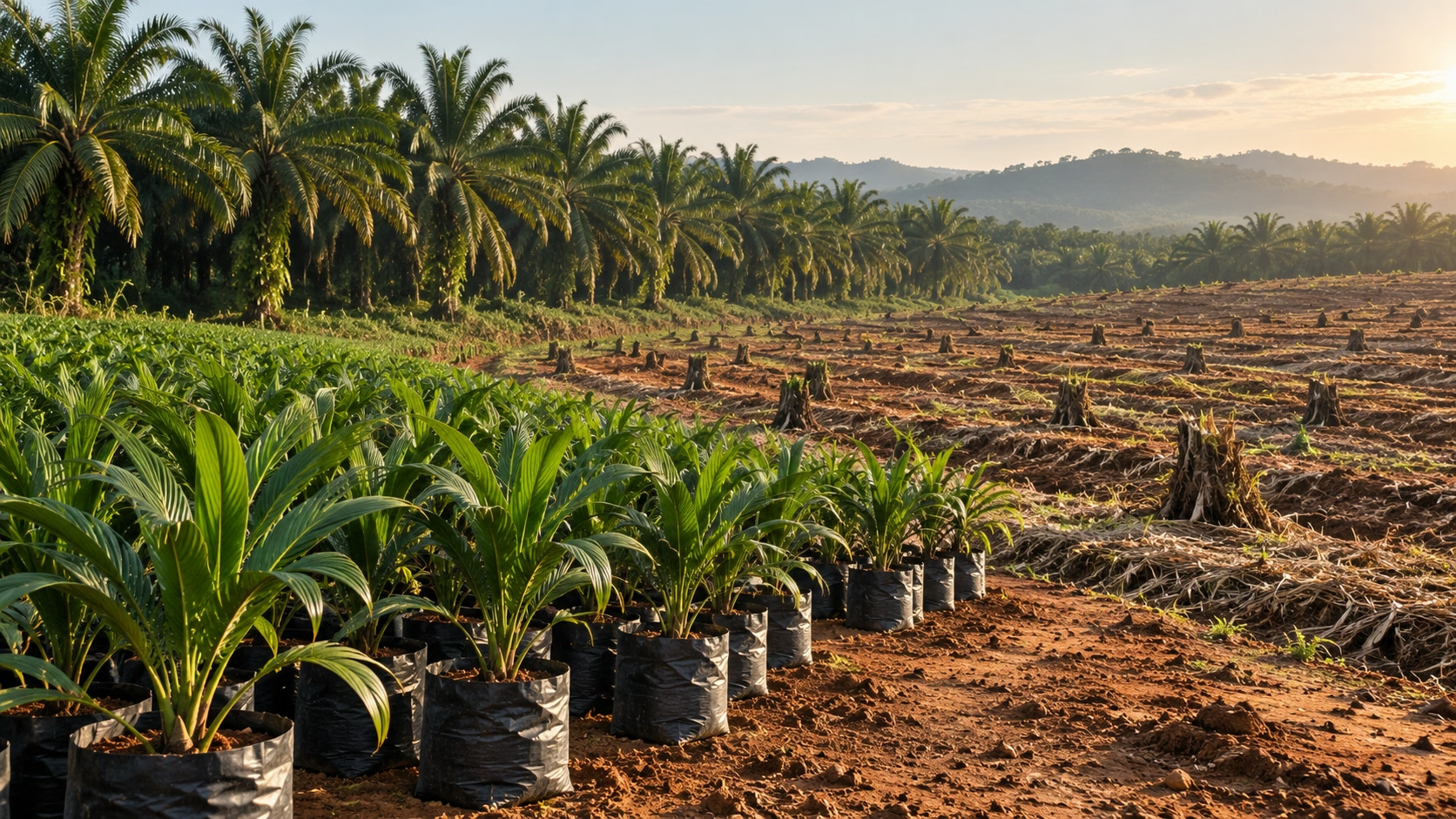
On 15 October, SIPEF forecast US$130m to US$150m of net cash at the end of 2026, after deducting financial debt. It may also defer some replanting to 2027 because the soil lacks sufficient moisture.
How much comes from operations, and how much from spending that can wait? More cash can come from a business earning more, or from expenditure pushed into a later period. For Ackermans & van Haaren shareholders, the distinction matters.
SIPEF makes a measurable agricultural contribution to AvH
SIPEF produces palm oil and bananas in Indonesia, Papua New Guinea and Côte d’Ivoire. AvH owned 43.32% at 30 June. It is a minority investment, accounted for by recognising AvH’s share of earnings rather than adding all SIPEF’s sales to group revenue.
In the first half, SIPEF contributed €22.1m to AvH’s €339.6m net profit. That is approximately 6.5% of the holding company’s earnings. It matters, while remaining smaller than the maritime and banking activities.
SIPEF’s cash initially stays at SIPEF. It funds estates, projects and distributions. Higher agricultural cash becomes a resource for AvH when it actually reaches the holding company, through a dividend for example.
Production is genuinely supporting earnings
The release provides operating reasons for the improvement. Palm oil output rose by 10.4% over nine months. Additional volumes help absorb production costs.
On 15 October, SIPEF chief financial officer Bart Cambré said unit costs had fallen by 1.6% despite increases in some input prices. The company forecasts full-year recurring earnings attributable to the group of US$140m to US$150m.
The important word is “forecasts”. Final-quarter volumes, prices and export charges will still shape the final result. But the cash improvement does rest on a business whose increased production is already observable.
Replanting shifts part of the expenditure into a later period
A newly planted palm needs sufficient soil moisture to establish its roots. Dry conditions associated with El Niño may push part of SIPEF’s final-quarter replanting programme into 2027. Young plants can wait. The need to renew the estates remains.
SIPEF links its revised capital expenditure estimate to that possible delay. The table compares the published ranges without presenting the difference as a permanent saving.
| Planned investment for 2026 | Amount in US dollars | Interpretation |
|---|---|---|
| Presented at the half year | 100m to 120m | Previously announced programme |
| Updated on 15 October | 90m to 100m | Some replanting may move into 2027 |
This expenditure maintains the productive assets. Deferral temporarily leaves more cash in the business. Removing it permanently would raise a different question about future harvests.
More output, more potential cash
Sales can help fund investment and distributions.
Replanting waits
Cash remains available temporarily, with an investment need to revisit later.
The first mechanism concerns performance. The second concerns timing. The release does not separately quantify their contributions to forecast net cash.
The starting date changes the cash story
SIPEF ended 2025 with US$88.4m of net cash. By the end of June, it already held US$124.5m. The December target therefore extends an improvement largely established during the first half.
- 31 December 2025US$88.4m actualStarting point for the year.
- 30 June 2026US$124.5m actualMuch of the projected annual improvement is already visible.
- 31 December 2026US$130m to US$150m forecastStill dependent on year-end expenditure and other cash movements.
For AvH, the task is twofold: follow its investment’s earnings, then assess how the capital remains productive. This is the agricultural extension of our analysis of the holding company’s cash engines.
What we do not know
The exact value of replanting to be deferred remains unknown. Annual accounts, expected in February 2027 according to SIPEF’s calendar, will clarify actual expenditure. The drought’s impact on subsequent harvests will need monitoring beyond that date.
Tiabam, whose acquisition we previously explained, was acquired on 30 September with accounting effect from 1 October. It therefore made no contribution to the nine-month figures. This release still does not disclose the purchase price.
How we counted
The earnings contribution is calculated as 22.1 / 339.6. It is neither a weight in AvH’s net assets nor a dividend. SIPEF’s figures remain in US dollars to compare forecasts without introducing an exchange-rate movement. We have not reconstructed a numerical bridge to future cash using unavailable data.
Sources
- SIPEF, nine-month statement published 15 October 2026, original Dutch version, pages 2, 8, 9 and 10
- SIPEF, same statement, English translation, pages 2, 7, 8 and 9
- AvH, half-year report published 28 August 2026, pages 17, 18 and 30: contribution, ownership, cash and SIPEF investment programme
- SIPEF, financial calendar announced 10 June 2026
Share this article