News · Exor N.V.
Exor: Stellantis sells almost as many vehicles in the US, but ships 12% fewer in North America
In the third quarter, Stellantis sold almost as many vehicles in the United States as a year earlier: 324,277 against 324,825, or −0.2% by our calculation. Yet its North American shipments fell by about 47,000 units, or 12%, according to its estimates of 13 October. For Exor, the gap matters: it is the shipment, more than the sale to the end customer, that generally drives the carmaker's revenue.
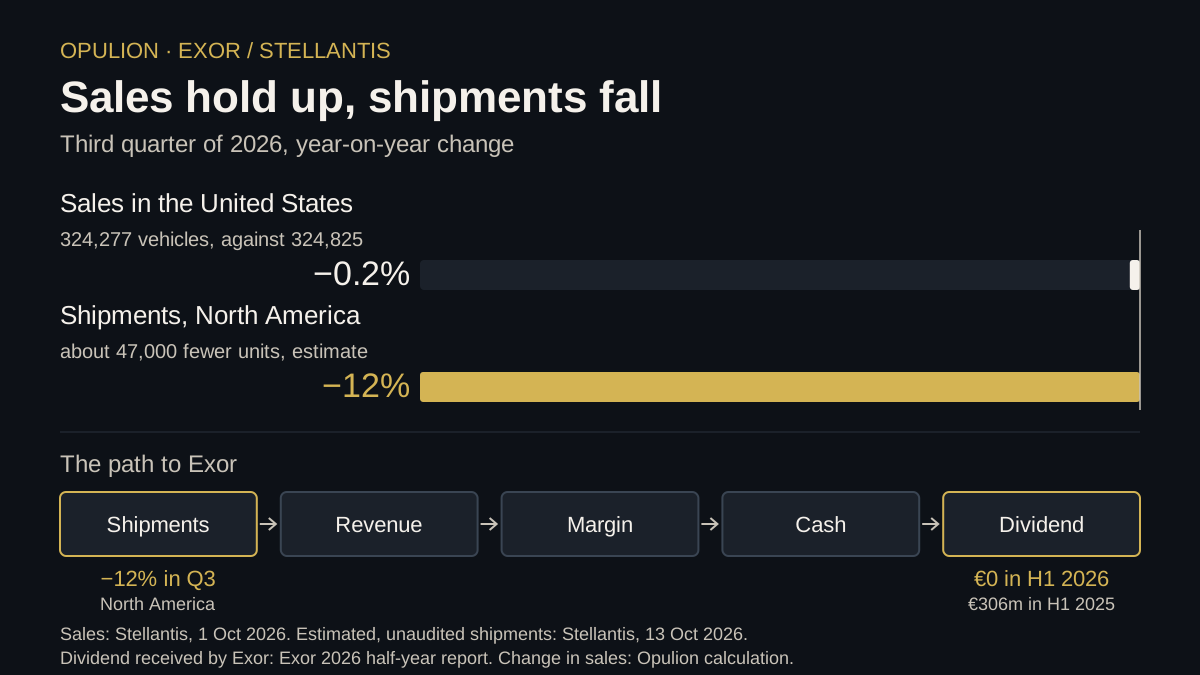
Why it matters for Exor shareholders: at 30 June 2026, Exor held 15.5% of Stellantis's economic rights, a holding of €2,236m that accounted for 6.3% of its gross assets after a €2,016m fall in value over the half-year. The carmaker paid it nothing in the first half. For a Stellantis recovery to reach Exor, it has to pass through a chain: shipments, revenue, margin, cash, then dividend. The 13 October figure is the first link, and it is falling in North America.
The quarter's two figures measure different things. The sales published on 1 October cover the United States only. Shipments count the new vehicles invoiced by Stellantis to dealers, distributors or directly to customers, across North America. The group states that they generally drive the recognition of its revenue. It attributes the decline mainly to planned production downtime affecting certain Jeep models: the Grand Cherokee and the Compass each fell by about 25,000 units, while Ram rose by about 17,000.
When sales hold up and shipments fall, dealers may have drawn on their inventories. This is an Opulion hypothesis, on which both press releases are silent. The scopes also differ: the United States alone for sales, the whole of North America for shipments. Our analysis of 5 October had noted the opposite movement in the second quarter: in its half-year report, Stellantis explained part of the rise in its North American shipments by an inventory build ahead of the planned summer production shutdown. Elsewhere, Enlarged Europe gained about 54,000 units, driven by electric vehicles from the group's brands and from Leapmotor. In total, estimated shipments reached about 1.3 million vehicles, down 1%.
North America
Fewer vehicles invoiced, mainly at Jeep, despite the rise at Ram.
US sales
Customers bought almost as many vehicles as a year earlier.
Revenue and cash
Revenue, margin and cash for the quarter are absent from the press release.
The results of 28 October will show whether this decline weighs on the quarter. Three figures will matter first: North American revenue if it is broken out, dealer inventories if they are published, and industrial free cash flow, which at the end of the chain determines what Stellantis can distribute to its shareholders, Exor included.
Sources
- Stellantis, calendrier financier 2026 · Stellantis N.V.
- Stellantis, expéditions consolidées estimées du troisième trimestre 2026 · Stellantis N.V. · Oct 13, 2026
- Stellantis (FCA US), ventes aux États-Unis du troisième trimestre 2026 · FCA US LLC (Stellantis) · Oct 1, 2026
- Stellantis, rapport semestriel au 30/06/2026 (6-K) · Stellantis N.V.
- Exor, rapport semestriel 2026 · Exor N.V. · Sep 22, 2026
Share this article