News · Prosus N.V.
iFood: a police seizure reveals the data battle behind Prosus's asset
A computer and phone have been seized from a former commercial executive. No unlawful use has been established, but the investigation shows why restaurant data have become a strategic asset in Brazil's delivery war.
Courtesy translation of the French original.
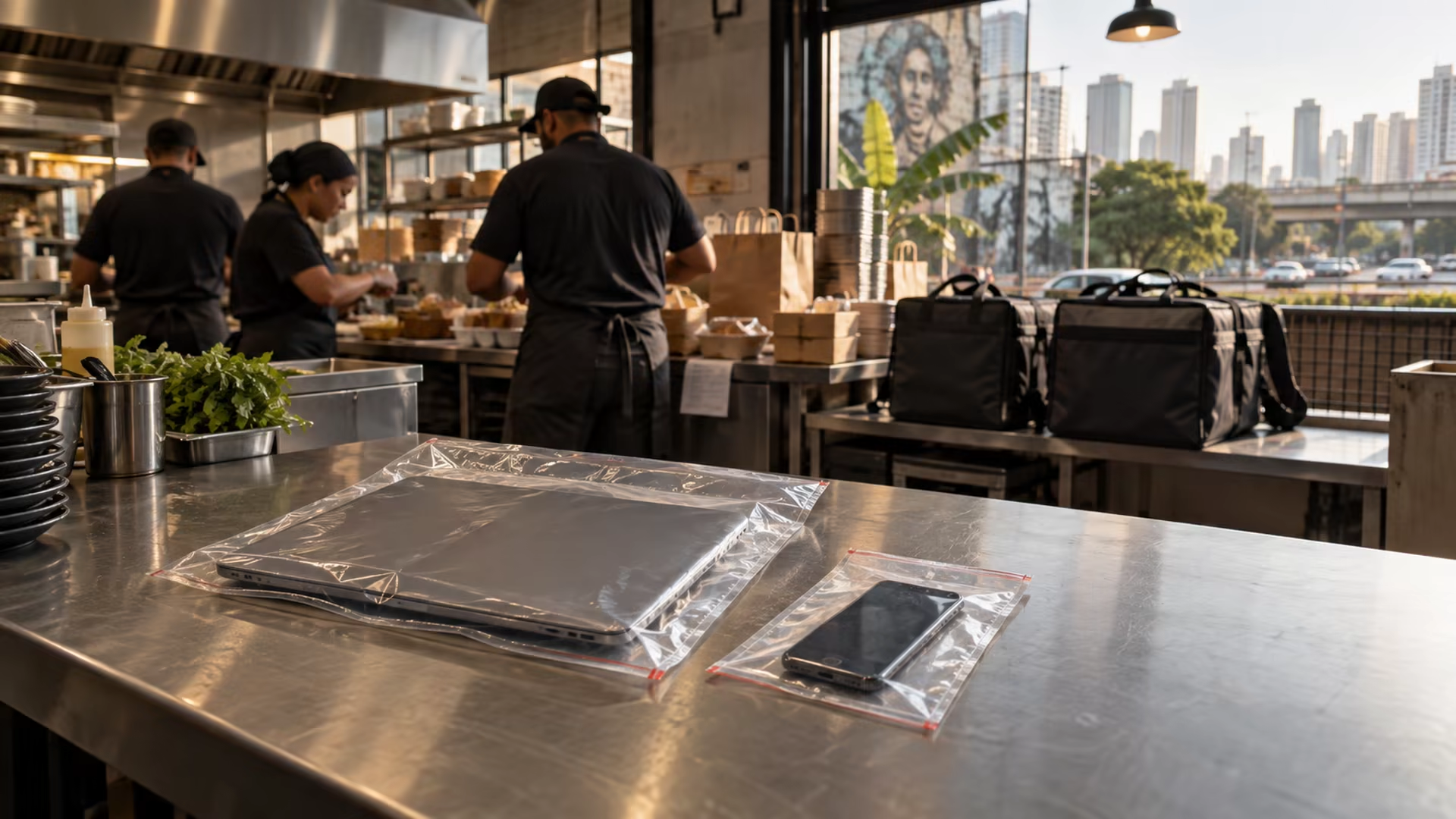
Brazilian police have seized a computer and a phone from a former iFood commercial executive suspected of downloading confidential information before leaving the company. The devices still need forensic examination. Nothing yet shows that a competitor used the data. For Prosus shareholders, however, the case exposes what a delivery platform really owns: not only a brand and courier network, but a detailed map of restaurants, orders, prices and local habits.
What is known, and what is not
Reuters reports that Brazilian police executed a search-and-seizure measure targeting a former iFood strategic-sales executive. The company suspects the former employee downloaded confidential commercial information before an announced move to 99Food.
A computer and phone were seized for forensic examination. The investigation must establish what data were copied, where they travelled and whether anyone used them.
99Food says it does not tolerate unlawful use of confidential data and that the person targeted is not currently part of its workforce. iFood says it took legal measures after an internal review identified downloads.
Those positions must remain attributed. A police seizure is an investigative act, not proof of wrongdoing. No public evidence currently establishes that 99Food or another competitor received or used the information.
Why delivery data are worth more than a restaurant list
iFood connects consumers, restaurants and couriers. Each order records a combination that is difficult to replicate: what a neighbourhood orders, when, at what price, with what delivery time and frequency.
Restaurants and contracts
Helps target the most important merchants.
Customers and habits
Guides promotions and personalisation.
Local network
Helps reduce delivery time and cost per order.
Payments and credit
May support iFood Pago, with credit and privacy risk.
A new platform can buy advertising, recruit couriers and subsidise orders. It cannot instantly reproduce years of local observations. Protecting commercial data therefore becomes part of the competitive advantage.
The direct link to Prosus
Prosus controls iFood and assigns it an analyst consensus value of USD6.4 billion. In the latest net asset value table reviewed by Opulion, that represents about 4.2% of gross assets and 4.4% of Prosus's net asset value.
Gross assets add the holdings before net debt. Net asset value deducts that debt. iFood therefore does not determine Prosus's value by itself, which remains dominated by Tencent, but it is one of the group's leading controlled assets and a pillar of its local-services strategy.
The investigation does not justify any numerical valuation adjustment. It raises three questions about operating quality instead:
- does iFood control access and downloads by sensitive employees properly? - can it prove that strategic information has not left its perimeter? - do its procedures protect both trade secrets and personal data?
The same asset, two stories in forty-eight hours
On 17 September, Opulion analysed iFood's announced BRL24 billion investment programme. The plan aims to build a broader platform linking meals, supermarkets, pharmacies, payments, logistics and artificial intelligence.
The present case shows the other side of that ambition. The more activities iFood connects, the more useful its data become. The more useful they become, the more their protection matters. The investment plan and the investigation are not separate stories: they describe the same asset, one through its growth capacity and the other through its control risk.
A market under rising pressure
Reuters reports that iFood controls about 80% of Brazil's meal-delivery market, based on an Abrasel estimate. The figure is not audited by iFood. It nevertheless provides context: 99Food has returned to the market and Meituan-backed Keeta is deploying capital too.
In a more competitive market, information about the most productive restaurants, dense areas and effective promotions may shorten a new entrant's learning curve. That explains the case's economic sensitivity without prejudging what actually occurred.
What could make the issue material
At present, two devices have been seized and an investigation is in progress. The issue would become more material to Prosus if one of the following were established: a broad data leak, competitor use, a regulatory penalty, significant commercial cost or a systemic weakness in internal controls.
Opulion view. iFood's value rests on a loop: more orders produce more data, better decisions and potentially better service. The investigation is a reminder that the loop is defensible only if access is traceable, sensitive employee departures are managed and evidence can be produced quickly.
The next useful fact will not be another statement of position. It will be the forensic result or a decision from the authorities. Until then, any conclusion about the destination or use of the data would be premature.
Sources
Sources
- Brazil police seize devices from former iFood employee in trade secrets probe · Reuters via StreetInsider · Sep 18, 2026
- Prosus food delivery portfolio overview · Prosus
- Prosus net asset value statement · Prosus
Share this piece